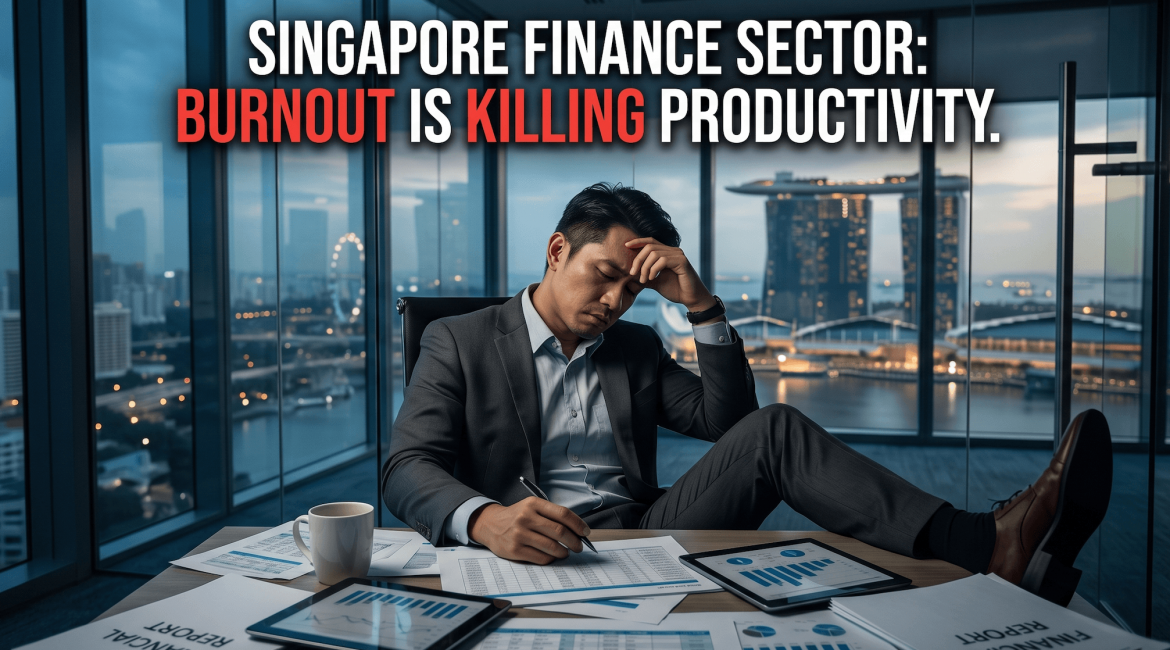
Finance leadership teams in Singapore struggling with Burnout
The high-stakes corridors of Singapore’s central business district are facing a quiet operational crisis. Recent data from the 2026 ManpowerGroup Global Talent Barometer reveals that an alarming 72% of Singaporean workers report experiencing burnout, with daily stress levels hovering above 53%. While individual stress is often treated as a personal issue, the reality is that finance leadership teams in Singapore struggling with Burnout represents a massive risk to corporate performance, decision-making quality, and talent retention.
For Chief Human Resources Officers (CHROs) and CEOs in the financial sector, addressing this exhaustion isn’t a “soft” human resources goal; it is a critical commercial necessity.
The Science of Cognitive Fatigue in Finance
When execution-driven professionals operate under prolonged strain without adequate recovery, the brain’s prefrontal cortex—the region responsible for risk assessment, analytical reasoning, and emotional regulation—begins to underperform. Neurological research demonstrates that chronic burnout shrinks gray matter in this critical area, severely slowing down cognitive processing.
For financial institutions where a split-second trading error or a flawed risk-mitigation strategy can cost millions, having finance leadership teams in Singapore struggling with Burnout is a liability.
Furthermore, burnout has a systemic “contagion effect.” When a director or department head is running on fumes, their capacity for empathetic management drops. This leads to friction, poor communication, and a wave of resignation letters across the broader team.
Three Key Takeaways for Financial Organizations
If your executive teams are showing signs of chronic fatigue, generic wellness apps will not move the needle. True cultural transformation requires a strategic shift:
- Establish Cognitive “Recharge Blocks”: High-performance corporate cultures must treat rest like elite athletes do. Implement dedicated blocks of time completely free of meetings and communication to allow for deep-focus cognitive recovery.
- De-Stigmatize Executive Vulnerability: If junior staff see that senior leaders never take breaks or openly address mental fitness, a culture of fear persists. Leadership must model sustainable work behaviors.
- Transition from Stress Management to “Wellness Performance”: Move away from reactive firefighting. Build proactive mental fitness programs that train managers to recognize early physiological indicators of stress before it crystallizes into full-blown burnout.
When assessing the health of your organization, look closely at your senior tiers. If you notice rising absenteeism, a dip in strategic agility, or an increase in unforced operational errors, it is highly likely you have finance leadership teams in Singapore struggling with Burnout.
Take Action Now
Is your organization looking to build an unshakeable culture of sustainable high performance? Whether you are planning an executive breakout workshop, an engaging team building activation, a lunch and learn programme, or a full-day masterclass, you can bring in expert support to revitalize your workforce.
Get in touch with Courtney Orange, Wellbeing expert, Resilience advisor, and Human Capital Consultant, at info@courtneyorange.com to discuss tailored keynote speaking or bespoke human capital consultancy for your organization.