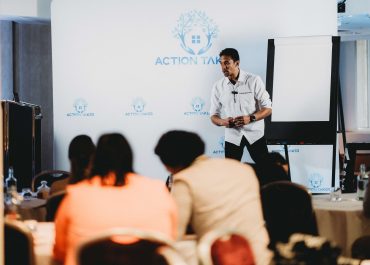
The pace of change inside Information Technology and Business Process Management (IT-BPM) organisations across South Asia has never been faster — or more punishing. Generative AI is being bolted onto legacy workflows almost overnight. Hybrid and asynchronous teams are trying to collaborate across time zones without a shared rhythm. And somewhere in the middle of it all, your most skilled people are quietly burning out.
If you are searching for a resilience speaker, a structured resilience workshop, or a longer resilience programme that actually speaks to the lived experience of a tech workforce, this article is your starting point.
The Problem Is Not Productivity — It Is Reinvention Fatigue
Most organisations in the IT-BPM sector are not struggling because their people lack skill. They are struggling because those same skilled people are being asked to reinvent themselves continuously, absorb one platform change after another, and perform at peak while the ground beneath them keeps shifting.
This is a distinct psychological pressure that generic wellness perks cannot fix. A fruit basket in the breakroom does not address the cognitive weight of learning a new AI toolchain for the third time in eighteen months. What your workforce needs is structured psychological infrastructure — frameworks for thinking, adapting, and recovering under sustained pressure.

This is precisely where a qualified human capital resilience consultant delivers measurable value. Not by lecturing your teams on the importance of mindfulness, but by equipping them with practical, evidence-informed tools for navigating Generative AI integration, digital exhaustion, and the friction that comes from heavily asynchronous collaboration.
According to Gallup’s State of the Global Workplace Report, employee stress levels have reached record highs globally, with technology sector employees disproportionately affected by role ambiguity and constant change. Separately, McKinsey’s research on workforce resilience consistently identifies resilience as one of the defining traits separating high-performing organisations from those that stall during periods of rapid transition.
What a Resilience Programme Looks Like for IT-BPM Teams
A well-designed resilience workshop for a tech or BPM workforce is not a single inspirational talk and a feedback form. It is a layered intervention that works at three levels:
Individual Level — Helping engineers, analysts, and project managers identify their personal exhaustion triggers and build sustainable high-performance routines that do not collapse under deadline pressure.
Team Level — Equipping team leads and mid-level managers with the language and tools to create psychologically safe environments where people can flag overload before it becomes attrition. In hybrid and asynchronous settings, this requires deliberate design, not good intentions.
Organisational Level — Working with senior leadership and HR to embed resilience into onboarding, performance cycles, and change management protocols, so that the next wave of AI integration lands with far less friction and human cost.
This is the architecture of a resilience programme that produces lasting return on investment — reduced turnover, faster adaptation cycles, and teams that remain cohesive under pressure rather than fragmenting.
If you would like to explore what this model looks like when applied to your specific organisation, visit Courtney Orange’s flagship approach to resilience consulting for an overview of the frameworks used across tech and BPM environments.
Three Key Takeaways


1. Digital burnout in IT-BPM is structural, not personal. The exhaustion your workforce is experiencing is not a reflection of individual weakness. It is the predictable result of continuous technological reinvention without adequate psychological support. Addressing it requires structural intervention, not surface-level wellness initiatives.
2. The greatest ROI from a resilience workshop comes from the middle layer. Team leads and middle managers are the transmission belt between organisational strategy and frontline execution. When they are equipped with resilience frameworks, those frameworks multiply across entire departments. Investing here produces disproportionate impact.
3. Resilience and performance are not in tension — they are directly linked. Organisations that invest in workforce resilience do not sacrifice productivity. Research consistently shows they accelerate it. Psychologically grounded teams make better decisions under pressure, retain institutional knowledge longer, and execute change initiatives with significantly less internal resistance.
If your IT-BPM organisation across South Asia is ready to move beyond reactive wellbeing and build genuine psychological infrastructure for your workforce, the next step is a conversation.
Reach out to Courtney Orange — resilience speaker, human capital consultant, and programme architect — to explore how a bespoke resilience workshop or programme can be designed around the specific pressures your teams are navigating right now.
Courtney Orange works with technology, BPM, and enterprise organisations across South Asia and beyond, delivering resilience keynotes, workshops, and multi-module consultancy programmes tailored to the human cost of rapid change.