Human Capital Resilience · Human-AI Collaboration
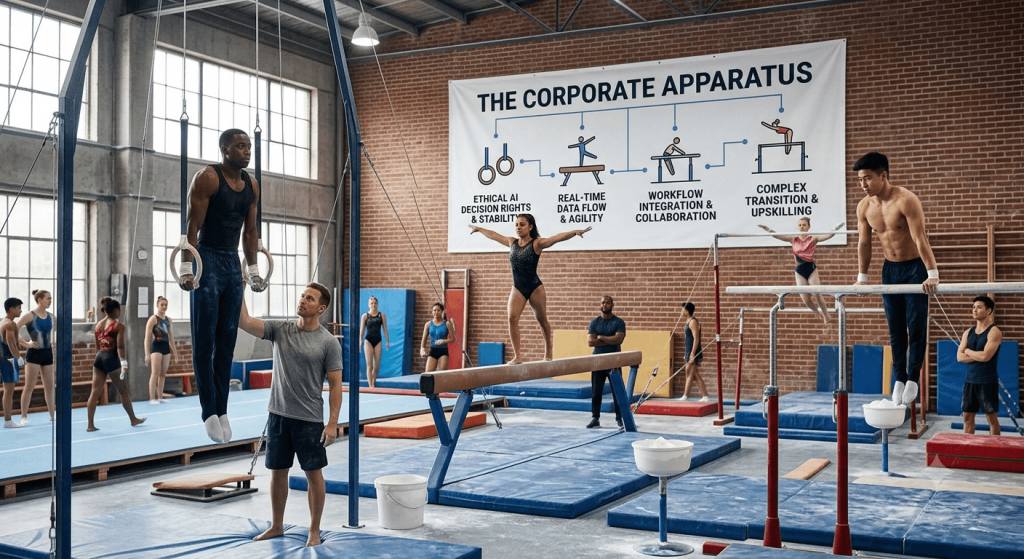
Six Gymnastic Disciplines. One Blueprint for AI-Ready Teams.
Elite gymnasts don’t fight their apparatus — they turn tension into control. The Corporate Apparatus™ applies the same core disciplines to help your workforce turn AI disruption into a competitive edge, not transformation fatigue.
39%
of workers’ core skills are expected to change by 2030 — WEF Future of Jobs Report, 2025.
1.6x
more likely to fail: organizations taking a purely tech-first approach to AI adoption — Deloitte Global Human Capital Trends.
70%
of business leaders name agility as their number one strategic priority — yet few train for it directly.
Book your FREE 15min
Consulting Call
MICROSOFT TEAMS CALL Request – Mail preferred Date & time to info@courtneyorange.com
GOOGLE MEET Call Request – – Mail preferred Date & time to info@courtneyorange.com
Why Gymnastics, Why Now
An athlete on the rings doesn’t overpower the apparatus — the instability is the training ground for control. That’s precisely the skill modern teams need for AI: not resistance, not blind trust, but continuous, confident adjustment.
This page breaks down the science behind each of the six disciplines and what it teaches your workforce about working alongside intelligent systems.
— and builds directly on the organisational resilience principles covered in our Organisation Resilience & Wellbeing Workshops.
| 1- Floor Apparatus | 2- Pommel / Beam Apparatus | 3- Rings Apparatus |
| 4- Vault Apparatus | 5- Parallel / Uneven Bars Apparatus | 6- Horizontal Bar Apparatus |
Meaning or (MAG – Mens Artistic Gymnastics & WAG – Women’s Artistic Gymnastics)
01 — Floor Exercise (MAG & WAG)
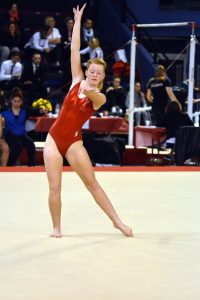
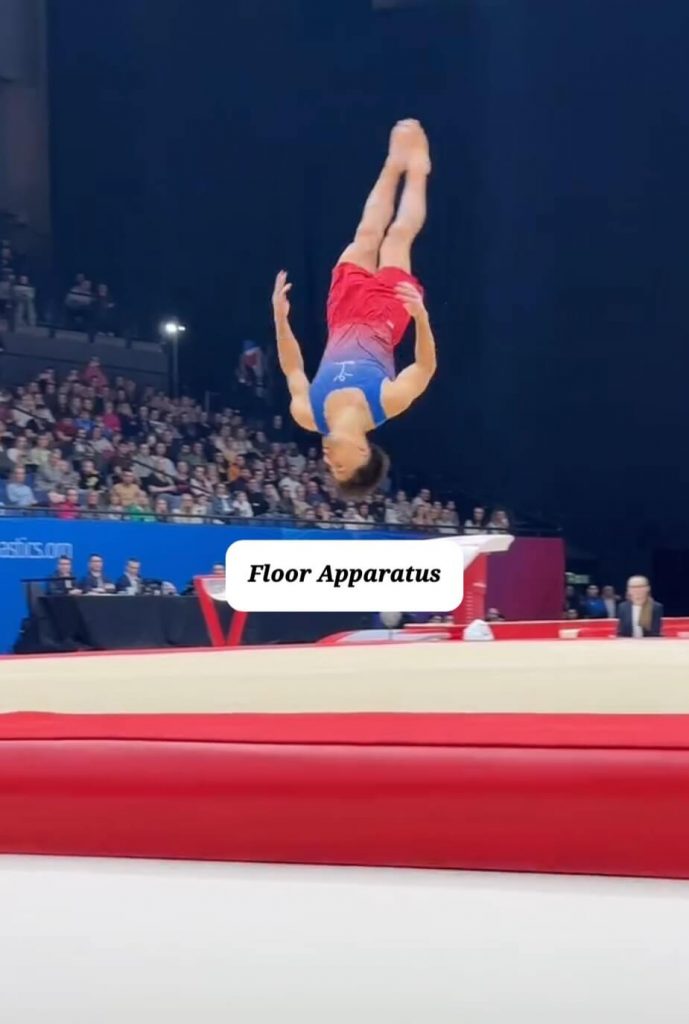
→ Agility & Baseline Culture The Science: Adaptive Skill Research Floor is the one event with no equipment at all — just fundamentals. WEF’s 2025 Future of Jobs data lists resilience, flexibility and agility among the skills separating growing roles from declining ones. Before any AI tool enters the picture, this is the baseline: the daily habits and culture that let a team absorb change without missing a beat.
02 — Pommel Horse / Balance Beam (MAG / WAG)

→ Continuous Micro-Adjustment The Science: Decision Fatigue Research Gymnasts on the horse or beam are never still — they’re making dozens of invisible corrections a second. Behavioral research on decision fatigue shows the brain treats every small AI-output judgment call the same way it treats a major decision. Teams need trained capacity for constant micro-corrections, or that capacity quietly runs out. see our related piece on The Hidden Cost of Decision Fatigue in Financial Services.
03 — Still Rings (MAG)
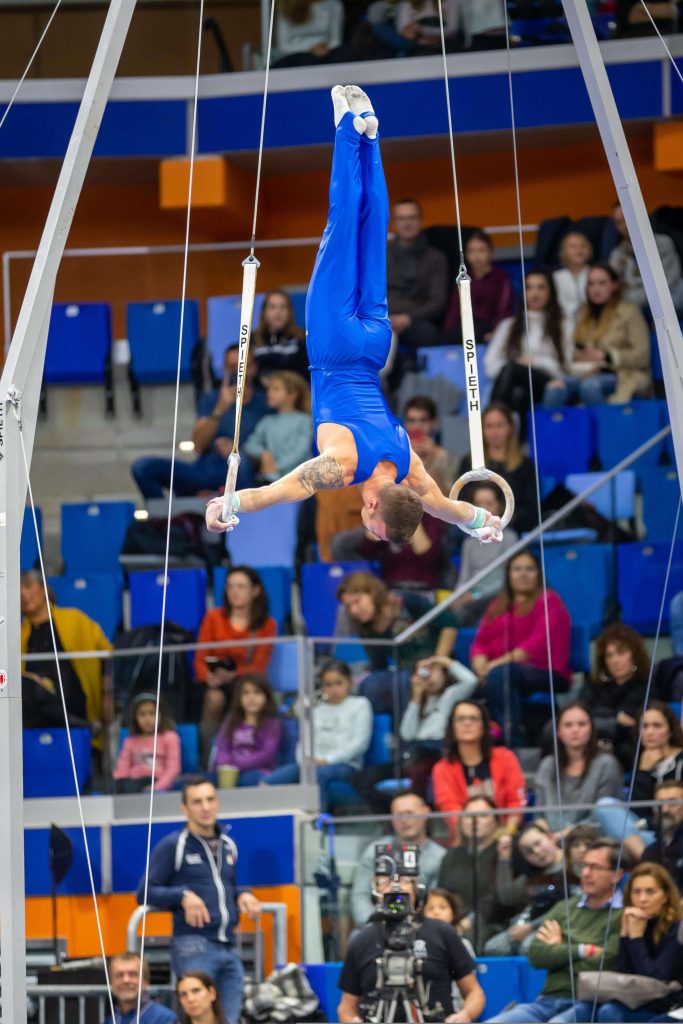
→ Core Stability Under Tension The Science: Psychological Safety Rings look motionless, but that stillness is generated by enormous core tension. Amy Edmondson’s psychological safety research shows teams that feel safe to pause, question, and flag concerns outperform those that don’t — especially under pressure. That’s Human-AI decision rights: steady ethical ownership while everything else moves.
04 — Vault (MAG & WAG)


→ Explosive Innovation & Risk Management The Science: Optimal Arousal (Yerkes-Dodson) A vault is one explosive effort down a short, contained runway — never a marathon. The Yerkes-Dodson law shows performance peaks under a well-timed, bounded level of pressure, not none and not too much. That’s how AI pilots should run: short, high-intent bursts with a clear landing, not open-ended rollouts that drain momentum.
05 — Parallel Bars / Uneven Bars (MAG / WAG)
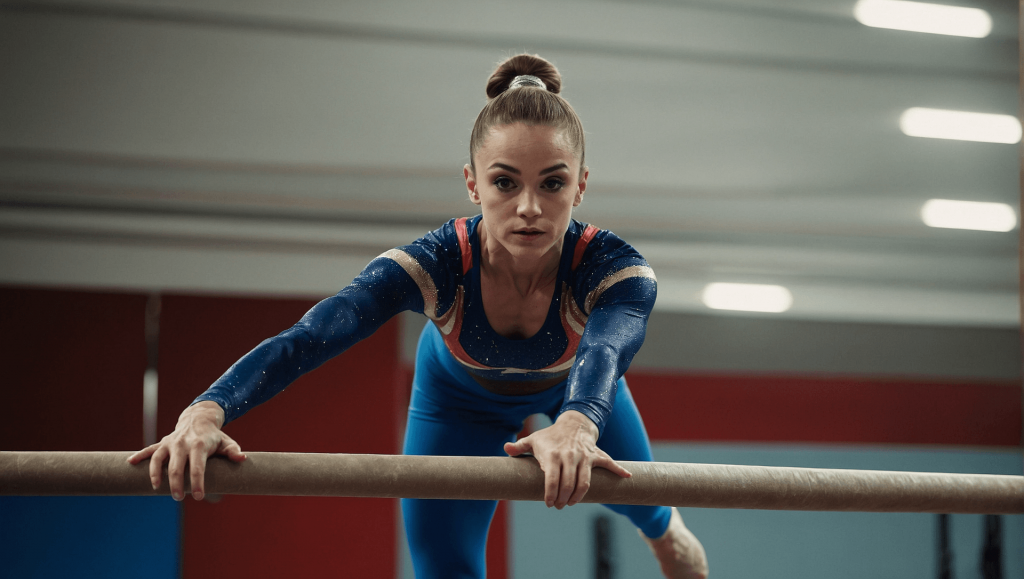

→ Cross-Functional Fluidity The Science: Organizational Network Research This event is defined by transition, not any single hold. Research on collaborative overload shows most workplace friction sits between functions, not within them. This apparatus maps to the connective tissue of a company — where an AI insight has to travel from data team to operations to frontline without losing meaning in transit.
06 — High Bar (MAG)
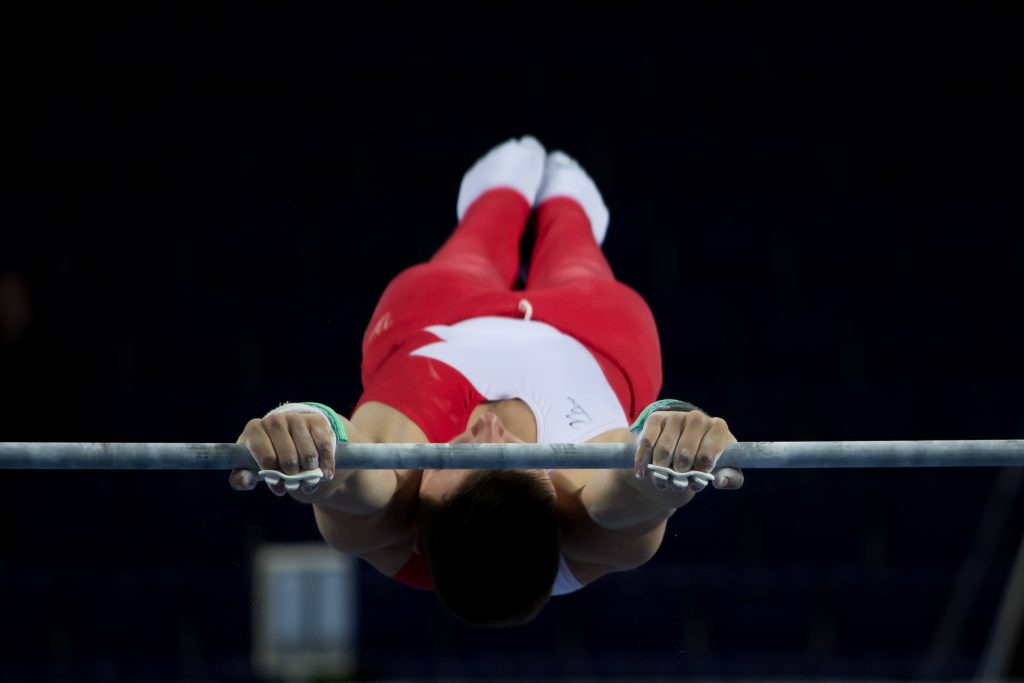
→ Momentum & Release Moves The Science: Loss Aversion The release move requires literally letting go of the bar mid-swing. Kahneman’s work on loss aversion explains why giving up a legacy habit feels disproportionately risky, even once a better one is within reach. With 39% of core skills set to shift by 2030, this is the psychological safety to release the old tool before you’ve fully landed the new one.
“Ready for Q4 Planning, or the New Financial Year?” Whether you’re benchmarking readiness now or budgeting for next year’s people strategy, here are two ways to start.
Option 1 — Talk Now: Book a 15-Minute Discovery Call A short, no-obligation call to walk through where your organization sits across the Six Apparatuses, and whether The Corporate Apparatus™ is the right fit for your next quarter. [Book My Call →]
MICROSOFT TEAMS CALL Request – Mail preferred Date & time to info@courtneyorange.com
GOOGLE MEET Call Request – – Mail preferred Date & time to info@courtneyorange.com
Option 2 — Explore First: Get the Free Workforce Readiness Worksheet A condensed version of the Workforce Balance Sheet diagnostic — identify which apparatus your organisation is currently struggling with, in under 10 minutes. – email info@courtneyorange.com with subject “Workforce Readiness Worksheet“
Book your FREE 15min
Consulting Call