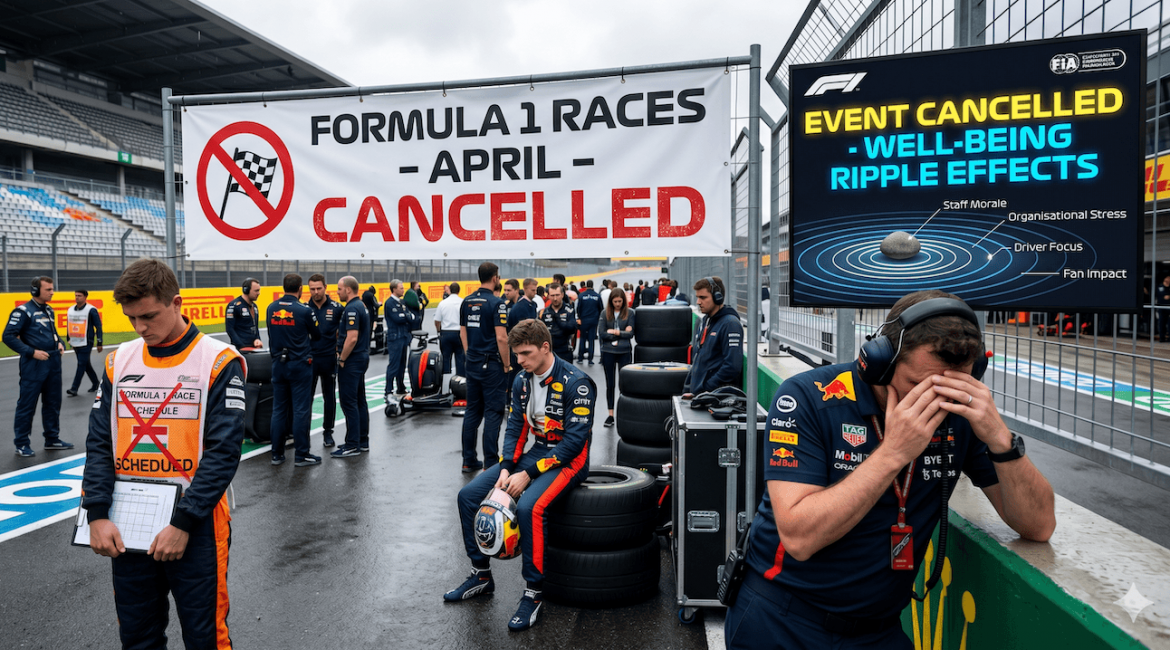
The abrupt shift in the Formula 1 calendar this April, marked by the cancellation of scheduled races, has sent ripples far beyond the asphalt. While fans miss the roar of the engines, the sudden void in the schedule has created a complex psychological landscape for those whose lives revolve around the “paddock.”
For the organizing bodies, the cancellation represents more than just a logistical puzzle; it is a period of intense pressure. Constant pivots and the uncertainty of rescheduling create a state of “hyper-vigilance,” where the brain is perpetually stuck in crisis-management mode. This prolonged state of high cortisol can lead to burnout before the season even fully restarts.
Race officials and technical staff often experience a loss of identity during these gaps. For individuals whose internal clocks are set to the relentless rhythm of a global tour, a sudden halt can lead to a sense of aimlessness. The “operational adrenaline” they rely on to perform high-stakes tasks suddenly vanishes, often replaced by a “comedown” effect that mirrors physical exhaustion.
Event and hospitality staff, many of whom operate as freelancers or seasonal contractors, face the most direct hit to their well-being through financial instability. The stress of lost income, combined with the loss of the social “traveling circus” community, can lead to significant isolation.
Finally, the drivers themselves face a unique mental hurdle. Elite athletes are programmed for peak performance at specific intervals. A cancelled race disrupts this biological and psychological peaking process. The sudden transition from 200mph environments to a standstill requires immense mental flexibility to maintain focus without the immediate reward of competition.
Three Key Takeaways for Maintaining Well-being
Throughout this gap in the sporting calendar, three strategies have emerged as critical for safeguarding mental health:
- Routine Re-Engineering: When the external schedule disappears, internal structure must take over. Establishing a non-negotiable daily routine helps regulate the nervous system and provides a sense of agency in an uncertain environment.
- Community Anchoring: The “paddock” is a family. Maintaining digital or local social connections with peers who understand the unique pressures of the industry is vital to combat the isolation that follows a cancelled event.
- Active Recovery vs. Passive Waiting: Rather than simply “waiting” for the next race, the most resilient individuals use this time for deliberate mental recovery. This means engaging in low-stakes hobbies or cognitive training that keeps the mind sharp without the burden of professional pressure.
Navigating these periods of disruption requires more than just patience; it requires a structured approach to mental toughness. If any organizations or teams are currently struggling with their well-being and require a bespoke program designed to build resilience through these challenging times, please reach out. We can design frameworks that help your people pivot from surviving to thriving.
Contact: info@Courtneyorange.com
