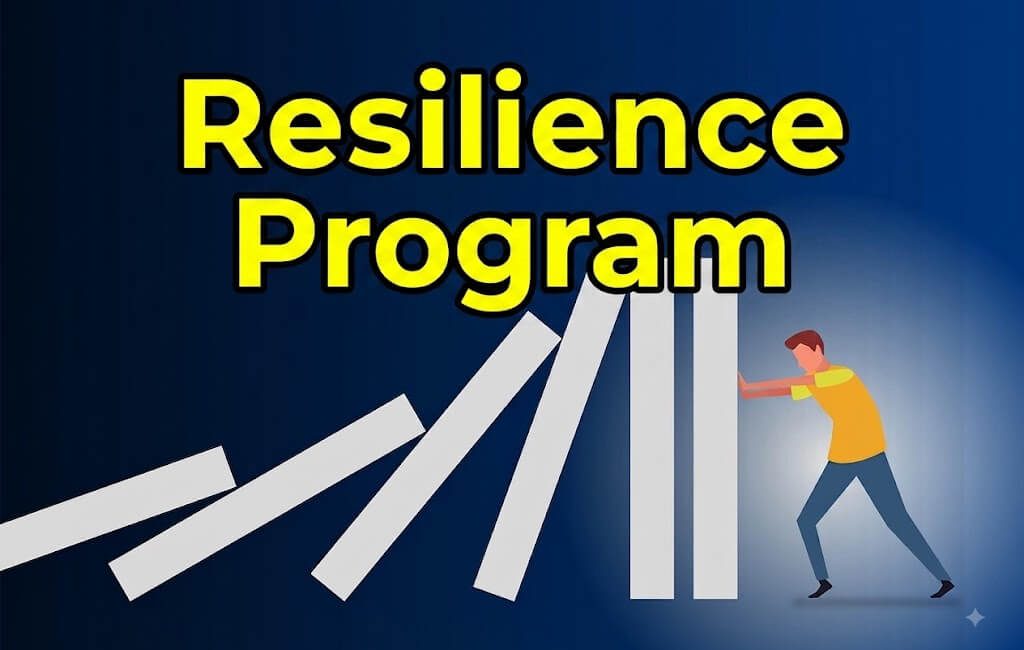
Here Is What Every Hospital and Lab Leader Needs to Address Right Now.
Healthcare professionals across South Asia are operating inside some of the most structurally demanding environments in the world. Hospitals running at overcapacity. Pharmaceutical manufacturing teams under relentless regulatory and production pressure. Biotech researchers navigating the weight of innovation timelines that directly affect human lives. And behind every one of those professional demands sits a human being — a doctor, a nurse, a lab technician, a department head — quietly absorbing a level of emotional and cognitive load that no job description ever fully prepares them for.
If your hospital network, pharmaceutical group, or biotech organisation is searching for a resilience speaker, a targeted resilience workshop, or a comprehensive resilience programme built for the specific pressures of healthcare and life sciences, this article will show you why the standard approach to staff wellbeing is failing your people — and what structural intervention actually looks like.
Why Compassion Fatigue Is the Most Expensive Problem in Healthcare That Nobody Is Budgeting For
There is a term used widely in clinical psychology that has not yet found its way into enough boardrooms and hospital management committees — compassion fatigue. It describes the gradual erosion of a healthcare professional’s capacity to feel genuine empathy and emotional engagement with the people they are caring for, as a direct result of sustained exposure to the suffering of others without adequate psychological recovery.
It is not weakness. It is not unprofessionalism. It is the entirely predictable consequence of asking human beings to perform emotionally demanding work at high volume, under chronic resource pressure, without building the structural conditions that allow psychological recovery to happen.
And its cost to healthcare organisations across South Asia is staggering — in clinical errors, in patient experience outcomes, in the accelerating attrition of experienced nurses, doctors, and specialists who simply reach the point where they can no longer continue. Recruiting and retraining a senior clinical professional costs multiples of what it would take to structurally support them through a properly designed resilience programme.
The Lancet’s research on healthcare worker burnout identifies burnout among clinical professionals as a global public health crisis, with rates across Asia’s healthcare systems among the most acute. Meanwhile, the World Health Organisation’s guidance on health worker mental health explicitly calls for systemic, organisational-level intervention — moving well beyond individual coping strategies toward structural redesign of the working environment itself.
This is precisely the distinction a qualified human capital resilience consultant brings to the healthcare sector. Not another mindfulness app. Not a poster in the staff room. Structural enterprise infrastructure — built into the way your organisation actually operates.
What a Resilience Programme Looks Like for Healthcare and Pharmaceutical Organisations

A resilience workshop designed for healthcare, pharmaceuticals, or biotech is not a generic wellbeing day. It is a precision intervention that understands the clinical environment, speaks the language of healthcare operations, and is built to create lasting behavioural and systemic change across three critical layers:
Hospital Leadership & Medical Directors — Equipping chief medical officers, hospital directors, and department heads with the frameworks to redesign workflow structures that actively reduce compassion fatigue rather than simply acknowledging it. Leadership in healthcare sets the psychological tone for the entire clinical environment. When senior clinicians and administrators model genuine resilience, it creates permission for every layer below them to prioritise their own psychological health without guilt.
Clinical Middle Management & Ward Leaders — Charge nurses, ward managers, department supervisors, and lab leads carry the dual burden of clinical responsibility and team management simultaneously. This layer is often the most overlooked in traditional wellbeing programmes and the most impactful to invest in. Equipping these individuals with practical resilience frameworks transforms how stress travels — or stops travelling — through an entire department.
Frontline Clinical & Research Staff — Doctors, nurses, pharmacists, biotech researchers, and pharmaceutical production teams each face distinct psychological pressures that require a sector-specific approach. A resilience programme at this level provides the evidence-based tools for managing emotional exposure, navigating high-stakes uncertainty, and maintaining the quality of care and scientific rigour that your organisation’s reputation depends on.
The aim is not simply to help your people cope better. It is to redesign the structural conditions in which they work so that burnout becomes the exception rather than the norm — and so that your organisation retains the experienced, committed professionals it has invested years in developing.
To explore how this model translates into practice across healthcare and pharmaceutical environments, visit Courtney Orange’s human capital resilience consulting practice for an overview of the frameworks and programme architectures available.
Three Key Takeaways
1. Compassion fatigue is a structural failure, not a personal one. When a nurse stops caring, when a doctor becomes detached, when a pharmacist makes an error they would never have made two years ago — the instinct is to address it at the individual level. The evidence says the solution must be structural. Organisations that redesign their workflows, recovery windows, and leadership culture to actively prevent compassion fatigue will outperform those that continue managing its consequences after the damage is done.
2. Clinical excellence and psychological safety are inseparable. The quality of patient care in your hospital or clinical network is directly correlated with the psychological state of the people delivering it. A team operating under chronic stress, compassion fatigue, or burnout does not deliver the same standard of care as a team that feels genuinely supported, heard, and equipped to manage the emotional demands of clinical work. Investing in a resilience programme is not separate from your clinical quality strategy — it is central to it.
3. The most dangerous moment in any healthcare organisation is when experienced professionals start leaving. Senior nurses, specialist doctors, and experienced pharmaceutical researchers represent years of irreplaceable institutional knowledge and clinical judgement. When they leave — through burnout, attrition, or quiet disengagement — they take with them a depth of expertise that cannot be rapidly replaced. A resilience programme that keeps your most experienced people psychologically well and professionally committed is one of the highest-return investments a healthcare organisation can make.
If your hospital network, pharmaceutical group, or biotech organisation across South Asia is ready to move beyond surface-level wellbeing initiatives and build the kind of structural psychological infrastructure that genuinely protects your people and elevates the standard of care you deliver, the conversation starts here.

Reach out to Courtney Orange — resilience speaker, human capital consultant, and programme architect for healthcare and life sciences environments — to explore how a bespoke resilience workshop or full programme can be designed around the specific pressures your clinical teams, researchers, and leaders are carrying right now.
Courtney Orange works with hospital networks, pharmaceutical organisations, and biotech institutions across South Asia and beyond, delivering resilience keynotes, clinical leadership workshops, and multi-module consultancy programmes designed to structurally protect the people whose work saves and improves the lives of others.
