Teaching has always been demanding. But what is happening inside Multi-Academy Trusts and independent schools across South Asia right now goes well beyond the ordinary pressures of the classroom. Teacher attrition is accelerating.
Headmasters are absorbing pressure from every direction — parents, regulators, governing boards, and students simultaneously. Faculty are expected to innovate, differentiate, and perform at the highest academic standard while quietly carrying the emotional weight of an entire institution.
If your trust, board, or school leadership team is searching for a resilience speaker, a meaningful resilience workshop, or a structured resilience programme designed specifically for the education sector, this article will show you exactly why that investment is not optional — and what it should look like in practice.
The Crisis Hiding Behind Academic Performance Metrics

The most dangerous thing about educator burnout is how invisible it is until it is too late. Unlike a dropped sales target or a missed production quota, the erosion of a teacher’s psychological reserves does not appear on a dashboard. It shows up months later — in resignation letters, in chronic absenteeism, in the quiet disengagement of your most experienced faculty members who have simply stopped bringing their full selves to the classroom.
Academic performance anxiety is now a systemic issue, not an individual one. Students absorbing examination pressure, teachers internalising student outcomes as personal failures, and school leaders carrying institutional accountability without adequate psychological support — this is the compounding cycle that no amount of professional development days or end-of-term celebrations will break.
What is required is a systemic educational resilience model — one that builds psychological safety into the fabric of how your institution operates, not as an afterthought, but as a structural priority embedded at every level from the board room to the staffroom.
Research published by the Education Support Partnership consistently identifies teaching as one of the highest-stress professions globally, with burnout and intention to leave the profession reaching critical levels. Meanwhile, the World Health Organisation’s framework on workplace mental health makes clear that psychologically unsafe work environments directly undermine both staff retention and the quality of output — in education, that output is the learning experience of every student in your care.
What a Resilience Programme Looks Like for Educational Institutions
A well-constructed resilience workshop for school boards, headmasters, and faculty is not a motivational assembly or a one-day seminar on work-life balance. It is a precision intervention built around the specific psychological pressures of the education environment, delivered across three interdependent layers:
Board & Leadership Level — Equipping governors and executive principals with the frameworks to make resilience-informed decisions around staffing, workload design, and change management. Leadership tone sets the psychological climate for the entire institution. When leaders are grounded, that stability cascades downward.
Middle Leadership & Department Heads — This is where resilience programmes produce their greatest institutional return. Heads of department sit at the intersection of administrative pressure from above and emotional need from below. Training this layer to manage upward stress without passing it downward is one of the single most impactful investments an educational trust can make.
Classroom Teachers & Support Staff — Providing frontline educators with practical, evidence-based tools for managing academic performance anxiety, navigating difficult parent interactions, and maintaining emotional boundaries without sacrificing genuine care for their students.
The goal is not to make teachers tougher. It is to make the institution structurally safer — so that talented educators choose to stay, grow, and invest their best years in your school rather than quietly searching for the exit.
To explore how this model has been applied across educational environments, visit Courtney Orange’s work in human capital resilience consulting for an overview of the frameworks and programme structures available.
Three Key Takeaways
1. Teacher turnover is a resilience failure, not a recruitment problem. Every time a skilled, experienced teacher leaves your institution, they take years of institutional knowledge and student relationships with them. The cost of replacement — financial, cultural, and academic — far exceeds the investment of a structured resilience programme. Retention begins with psychological safety, and psychological safety must be deliberately designed.
2. Resilience workshops for educators must be sector-specific to be effective. A generic corporate wellness programme delivered to a school faculty will fall flat. The pressures of the classroom — examination culture, parental expectation, safeguarding responsibility, and the emotional labour of genuine teaching — require a resilience framework that speaks the language of education. Sector-specificity is not a luxury; it is the difference between a programme that lands and one that is forgotten by Monday morning.
3. Psychological safety is the foundation of academic excellence, not its opposite. There is a persistent myth in high-performing educational institutions that pressure drives results. The evidence says otherwise. Schools with strong internal psychological safety networks produce better academic outcomes, lower staff turnover, and more innovative teaching practice. Resilience is not the enemy of standards — it is what makes those standards sustainable over the long term.
If your Multi-Academy Trust or independent school across South Asia is ready to move beyond reactive staff welfare and build the kind of psychological infrastructure that protects your people and elevates your institution, the conversation starts here.
Reach out to Courtney Orange — resilience speaker, human capital consultant, and programme architect for the education sector — to discuss how a bespoke resilience workshop or full programme can be shaped around the specific pressures your school, trust, or faculty is carrying right now.
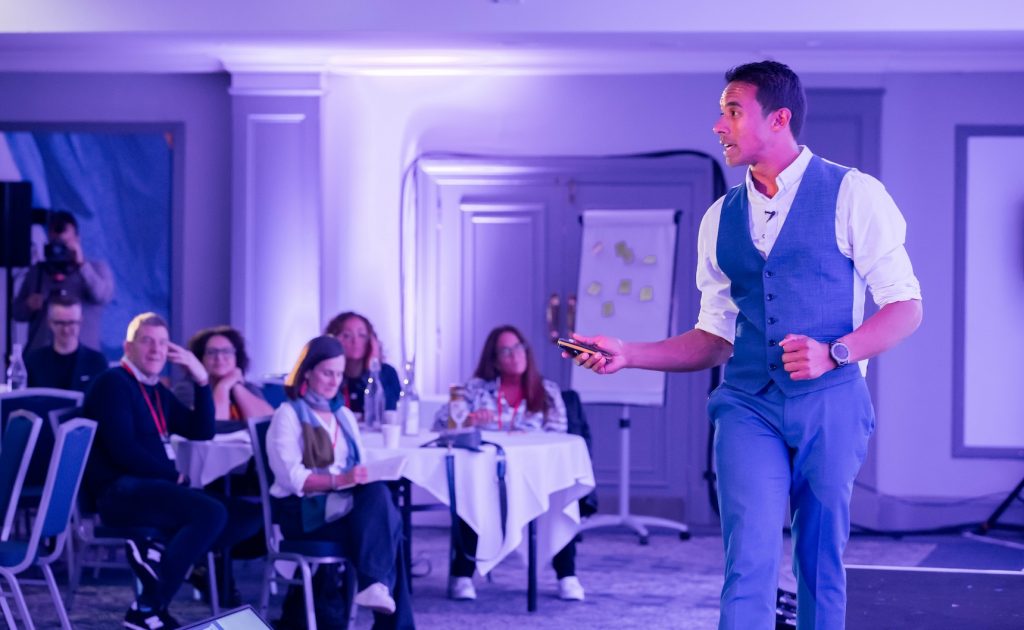
Courtney Orange partners with educational institutions, academy trusts, and school leadership teams across South Asia and beyond, delivering resilience keynotes, faculty workshops, and multi-module consultancy programmes designed to protect the people who shape the next generation.